
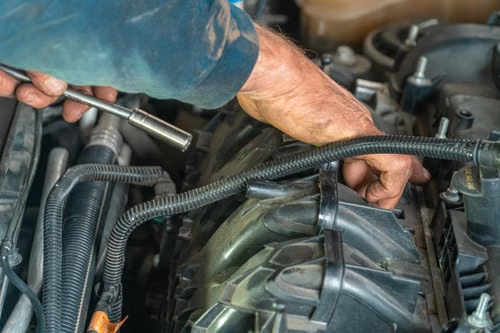
Should you replace the whole intake manifold assembly, or is changing the membrane enough?
In many cases, the right answer depends on the real condition of the part, not just the first symptom you notice.
An intake manifold membrane is a small part, but it can affect engine breathing, idle quality, vacuum control, and overall running behavior.
When it wears out, some drivers quickly assume the full assembly needs replacing. Sometimes that is true. Other times, a targeted membrane repair may be the smarter and more practical choice.
What Does the Intake Manifold Membrane Do?
The intake system helps control the air entering the engine. The membrane supports this process by helping manage pressure and airflow inside the system.
When the membrane is healthy, the engine can run more smoothly. When it becomes weak, cracked, or damaged, the engine may start showing small but annoying symptoms.
Common signs of membrane trouble
A faulty membrane may cause rough idle, whistling sounds, unstable engine behavior, poor response, or air leak symptoms. You may also notice that the car feels less smooth at low speed.
These signs do not prove the membrane is the only problem. They simply tell you the intake system needs proper inspection.
Intake Manifold Membrane vs Full Replacement
A full replacement means changing a larger assembly. A membrane repair focuses only on the worn or damaged part. Both options can be correct depending on the situation.
The table shows why diagnosis matters. Replacing the membrane can be sensible when the rest of the part is still in good condition. A full replacement becomes more reasonable when the damage is so severe.
| Option | When It May Make Sense | Main Advantage | What to Check First |
| Membrane replacement | The housing is still fine, and only the membrane is damaged | Lower cost and less waste | Cracks, fitment, and correct part match |
| Full replacement | The manifold body, housing, or connected parts are damaged | More complete repair | Overall wear, broken plastic, and air leaks |
| Further diagnosis | Symptoms are unclear or mixed with other engine issues | Avoids replacing the wrong part | Vacuum leaks, sensors, hoses, and fault codes |
When a Targeted Membrane Repair Makes Sense
A targeted repair is usually worth considering when the issue is limited to the membrane itself. This can happen when the outer part is not cracked, mounting points are intact, and no other related component shows serious wear.
For Skoda owners checking part options, it helps to compare the exact part before deciding between a small repair and a full assembly change. A useful starting point is this specific intake membrane reference: https://klifex.com/membranes-pcv-egr-oil-separator/skoda-intake-manifold-membrane.
Correct fitment matters
Do not choose a membrane only by appearance. Small differences in shape, size, or compatibility can affect the result. Always check the vehicle model, engine version, and part design before ordering.
If you are unsure, ask a mechanic to inspect the old part first.
When Full Replacement Is the Safer Choice
A full replacement may be better when the intake manifold body is damaged. It may also be needed if clips, plastic sections, seals, or connected areas are worn beyond repair.
Trying to repair a badly damaged assembly can create repeat problems. In that case, replacing the complete part may save time and frustration.
Look beyond the first symptom
A rough idle may come from the membrane, but it can also come from vacuum hoses, sensors, gaskets, or other intake leaks. That is why proper testing is important.
A smoke test, visual inspection, or diagnostic scan can help narrow the problem before money is spent.
How Drivers Should Decide
Start with the simplest question: is the failure limited to one replaceable part, or is the whole assembly worn?
If only the membrane is damaged, repair may be practical. If the surrounding structure is weak, cracked, or unreliable, full replacement is often the better route.
Also consider labor time. A small part may be cheaper, but if access is difficult, the total repair decision should include both parts and labor.
Conclusion
Choosing between an intake manifold membrane repair and full replacement is not about guessing. It is about inspection, fitment, and understanding the real cause of the problem. A membrane repair can be a smart option when the damage is limited, and the correct part is available. Full replacement is better when the larger assembly has wear or structural damage. For most drivers, the best step is simple: diagnose first, compare repair options second, and replace only what truly needs replacing.